
News
Tetra Tech BAS is currently working on projects throughout the world. Click on any the headlines below for more information on current news.
- Tetra Tech BAS Assisting Municipalities in the Development
GIS Brownfields Inventory Databases - Tetra Tech BAS Landfill Redevelopment Planning
Practice Continues to Grow
Tetra Tech BAS Assisting Municipalities in the Development
GIS Brownfields Inventory Databases
Tetra Tech BAS, in partnership with Project Navigator Ltd. (PNL), has been selected by several southern California municipalities to develop GIS-facilitated land portfolio screening tools in support of urban redevelopment programs.
The City of San Bernardino Economic Development Agency selected the BAS/PNL Team to create a GIS-compatible Brownfields Inventory Database and site ranking tool for the 7,600-acre San Bernardino Greater Downtown Revitalization Area (SBGDRA).
The inventory is the first step in the ultimate characterization and remediation of sites within the SBGDRA. The inventory will be utilized by the client to identify those properties whose redevelopment represents the highest potential benefit to the City. As property assessment and remediation efforts progress, the inventory will become a critical decision-making tool in the Agency’s continuing redevelopment efforts throughout the SBDGRA.
In another project, the City of Lynnwood selected the BAS/PNL Team to develop a database of properties in the 140-acre Long Beach Specific Plan Area, and to establish criteria to prioritize sites for further environmental investigation. The goal is to create a tool that the City can use to develop the most logical, cost-effective approach to cleaning up and restoring abandoned and blighted properties in the revitalization area.
Tetra Tech BAS has more than 27 years conducting multiple-parcel site assessment, environmental screening, and remediation support for large infrastructure improvement projects.
Tetra Tech BAS Landfill Redevelopment Planning
Practice Continues to Grow
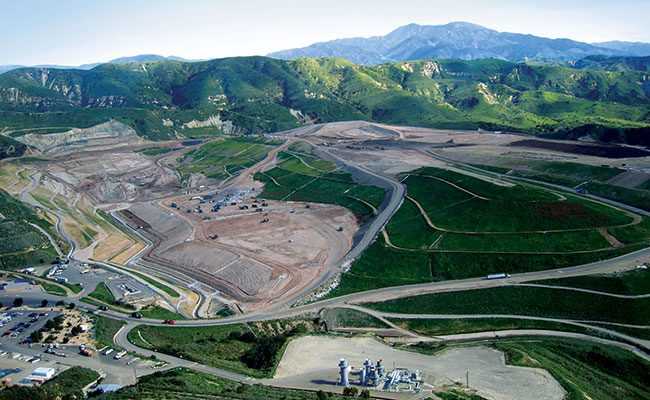
Redevelopment of historic landfills for commercial, residential, and recreational uses has gained increasing popularity in recent years. BAS has applied its broad experience in landfill closure design and landfill gas management to support three significant projects in Southern California.
Tetra Tech BAS is a subconsultant to Tetra Tech on a project to construct a mixed-use commercial and residential development on the former Cal Compact Landfill in Carson, California. The project consists of construction of commercial and residential development over the 157-acre former Class II Landfill. Over 2.4 million square feet of pile-supported structural concrete slabs will support the buildings at the site. BAS is responsible for the design of landfill gas management measures to protect the public from methane gas migration, and for the design and permitting of the final cap system for the site.
In another project, Tetra Tech BAS is supporting the Anaheim Redevelopment Agency and a private developer in the construction of a commercial development at the site of three historic municipal landfills. The proposed project will involve construction of 258,000 square feet of retail, commercial, and restaurant buildings. Tetra Tech BAS responsibilities include evaluation and design of a landfill cap, landfill gas control measures, and membrane systems for the protection of proposed development features.
In a third project, Tetra Tech BAS is providing planning and engineering services to the City of Long Beach for the development of municipal park improvements on portions of the former Davenport Landfill. BAS will be responsible for preparation of waste characterization studies, a Final Post Closure Land Use Proposal and associated plans, construction level plans and specifications for site closure, and record drawings. In addition, Tetra Tech BAS will be providing engineering support for park improvements to be constructed at the site.
Tetra Tech BAS has been a leader in the development of innovative landfill closure approaches since 1984, when it developed the first U.S EPA-approved closure plan for a Class I Landfill facility in the western United States.
